
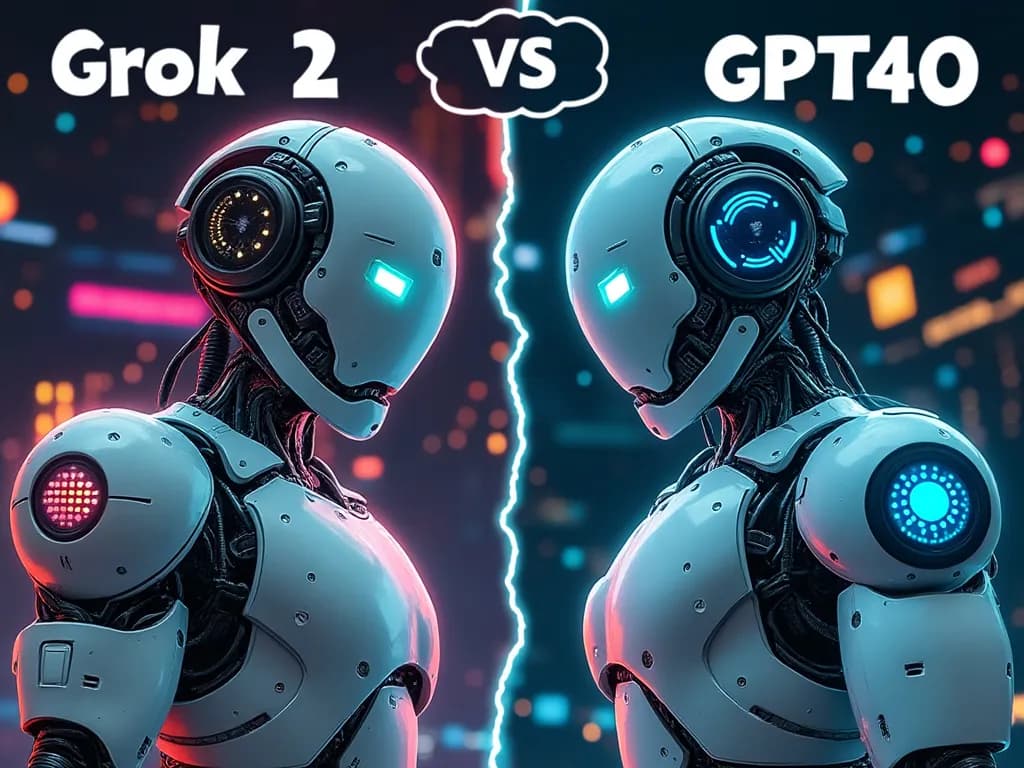
Grok 2: A Disruptive Force in the AI Domain
On August 24, 2024, a significant milestone was marked in the ever-evolving AI landscape. XAI’s Grok 2 and Grok Mini officially entered the leaderboard in the Chatbot Arena, presenting a formidable challenge to established players like OpenAI’s GPT-4 and Google’s Gemini models. Garnering over 6,000 community votes, Grok 2 has taken the number two spot, surpassing the May checkpoint of GPT-4.0 and even tying with the latest Gemini model, while Grok Mini impresses at number five.
Despite being a relatively new entrant, Grok 2 has demonstrated excellence across several categories, including handling complex prompts, coding tasks, and instruction following. However, as experts and users in the field start to put it to the test, questions arise surrounding Grok 2’s capabilities and limitations.
XAI’s Rapid Advancement Sparks Industry Buzz
The rapid development and success of Grok 2 astonished the tech community. Users have highlighted how XAI managed to catch up quickly to the competition despite juggernauts like OpenAI and Google taking considerably longer to refine their models.
One user stated, “Regardless of what you think about Grok and the way they have executed the release of this Grok model on the X platform, I think you still have to give a lot of credit to that team to be able to pull off such an advanced and powerful model in that short amount of time.”
However, skepticism remains concerning Grok 2’s capabilities compared to the more seasoned GPT-4 and Gemini models. While Grok 2 has excelled in certain areas, such as outperforming GPT-4.0, users continue to voice their doubts, expressing mixed feelings depending on the use cases.
For example, one user commented, “I’m not sure I agree with Grok 2 beating Sunnet 3.5, but I guess that is the power of a relatively uncensored model. I may have to give GPT-4.0 another go.” This statement underscores the ongoing debate over censorship in AI models, with some arguing that uncensored models may perform better but also introduce the risk of generating potentially harmful content.

Uncovering Grok 2’s Performance: Practical Evaluations & Insights
Several tests and experiments were conducted to evaluate Grok 2’s performance critically. A hard prompt test—one of the most prevalent challenges for AI models—assessed how Grok 2 generated sentences. This was a slow process, yet surprisingly, the model managed to correctly create a series of sentences that ended consistently with “Apple,” impressing the tester. Such consistency indicates Grok 2’s effectiveness in specific prompt scenarios.
However, the results were middling regarding coding and creative tasks—areas of particular interest, as many professionals use such models for programming assistance. Grok 2 was tested for code generation, specifically in creating a Python game to assist with learning about large language models (LLMs). While the model provided a general framework for the game, including quizzes and simulated learning, its output fell short of expectations when closely compared with what Gemini and CloudTree Profile Sunnet could accomplish.
The Grok 2 Mini model had previously been noted for generating code, but similar tasks were noticeably lacking with this latest Grok 2 Beta. While following an acceptable methodology, users noticed that the model failed to generate advanced or highly creative output—something that other models, like CloudTree and Gemini, could achieve with less effort.
Addressing the Truthfulness Challenge: Is Grok 2 Misinforming Users?
One critical aspect of AI performance is accuracy, especially for models embedded within platforms such as X (formerly Twitter), where real-time information dissemination is vital. Users evaluated Grok 2’s proficiency in delivering truthful, relevant content, given its ability to draw from the latest posts on X. However, concerns arose about the reliability of the information pulled from these posts, mainly when sourcing content from specific users or channels.
For example, during a test in which Grok 2 was tasked with providing up-to-date information about Apple’s upcoming events, it cited an alleged product launch on September 10, 2024. However, this left users uncertain whether the event was factual or merely a speculative outcome based on trending tweets about Apple.
Such scenarios highlight the ongoing challenges AI systems face in verifying the truthfulness of dynamically sourced content. Therefore, while Grok 2’s ability to harness real-time data has distinct advantages, the risk of circulating misinformation remains a genuine concern.
The Future of AI: Where Grok 2 Stands in Comparison
Through detailed evaluations, it becomes evident that while Grok 2 has potential, especially in circumventing some of the limitations faced by its predecessors, it’s not without its drawbacks. Its performance in mathematical challenges and day-to-day content tasks shows inconsistency, often mirroring results from less advanced models like Grok 2 Mini.
The model’s performance in specific domains, such as inconsistencies in solving math problems, may lead to further scrutiny. Several tests indicated that while Grok 2 presented a step forward from earlier iterations, it still encountered significant hurdles when tasked with more complex or precise calculations.
As technology continues evolving, Grok 2’s real-time update capabilities present a beneficial feature for general use cases—such as asking for recommendations or quick reference lookups—but it may still lag in specialized tasks, like advanced coding or math problem-solving.
Conclusion: Balancing Potential and Pragmatism
XAI’s Grok 2 emerges as a significant player in the AI arena, particularly potent in generating consistent outputs with an unfiltered data source from X. However, with great power comes the need for greater responsibility. As Grok 2 and its lightweight counterpart Grok Mini continue to catch up to market leaders like GPT-4 and Gemini, their success will ultimately depend on continuously refining their abilities, especially in handling unstructured data and delivering creative results.
For Saudi Arabian and broader Middle Eastern readers eager to explore these cutting-edge technologies, Grok 2 is an intriguing player to watch. Yet, as with any AI tool, users are advised to approach it with scrutiny and practical optimism. While Grok 2 offers a glimpse into the future of AI-powered content generation, heeding the limitations uncovered through these tests will be crucial in determining its place within the broader technological landscape.


