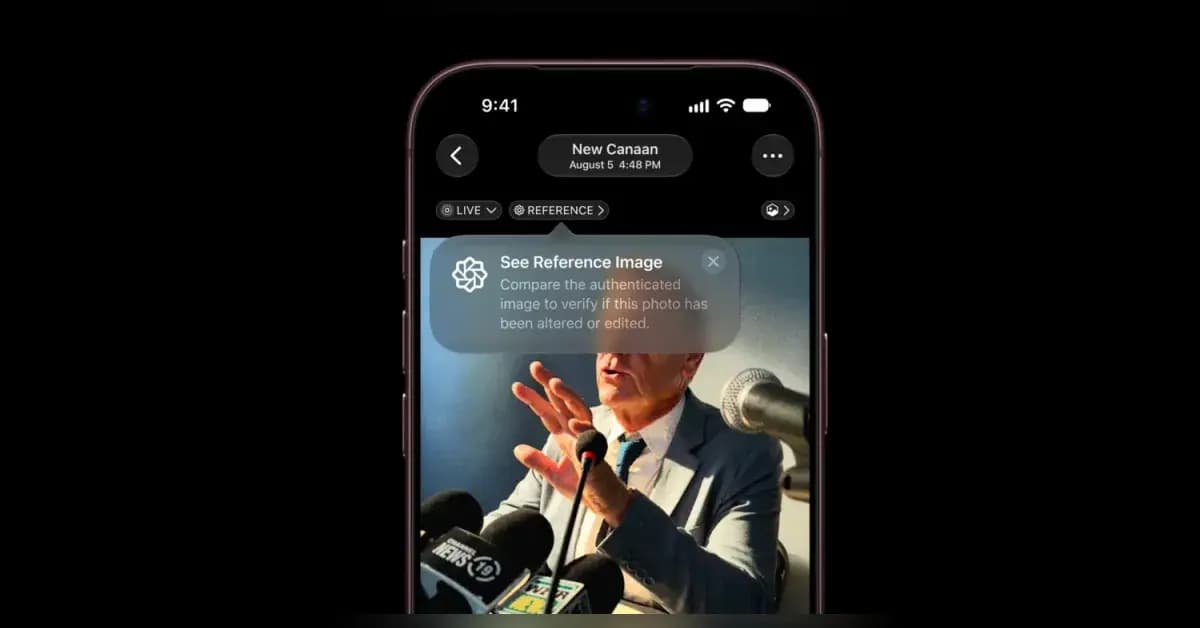
The new iPhone 18 Pro introduces a specialized camera mode designed to authenticate that captured photographs have not been altered with artificial intelligence tools.
Announced during the annual product event, the new capability creates a secure digital signature directly at the hardware sensor level. Specifically, the system operates when users switch the camera into Reference mode on either the standard Pro model or the Max variant. According to a report by The Verge, the camera sensor records signed data for every pixel during capture to prevent digital manipulation.
Hardware Verification on iPhone 18 Pro
Once the sensor captures the signed data, the device transmits the package to Private Cloud Compute. The secure server infrastructure develops the raw file into an unalterable reference image stored in the Photos app. Users can subsequently inspect the original cryptographic record alongside any edited versions to identify whether alterations occurred. The company compared this unmodifiable baseline file to a traditional photographic digital negative.
Beyond internal verification, the platform integrates with broader industry efforts to identify synthetic media. The system supports the SynthID standard alongside content provenance frameworks, linking into wider initiatives across cybersecurity and digital media validation.
Cloud Processing and Verification
Apple confirmed that the authentication workflow relies heavily on remote cryptographic verification. However, European Union regulations will affect initial deployment schedules. While customers in the EU market cannot capture signed reference images at launch, they will retain the ability to view and develop existing files on iOS 27, iPadOS 27, and macOS 27 platforms.
Developer Tools and Industry Standards
Third-party software engineers will gain access to a dedicated Reference Image API across Apple operating systems. Consequently, software creators building specialized apps can integrate verification tools directly into editorial workflows. This architectural decision enables external platforms to inspect authentic sensor signatures without relying exclusively on native system software.
Variable Aperture Sensor Mechanics
Alongside software authentication, the iPhone 18 Pro lineup features updated camera optics with a mechanical variable aperture on the 48-megapixel fusion main sensor. To adjust incoming light levels, the aperture mechanism employs six laser-cut blades made from a polymer composite, each measured thinner than a human strand of hair. A dedicated rotor controls blade movement across custom lens elements to improve low-light exposure control on these new mobile devices.